Best viewed on a desktop or laptop computer
Unraveling Sound
The cloth corpus reveals and categorises the overlooked textures of clothing sounds in film, exposing the rich narrative and aesthetic meanings woven into their subtle fabric
About
The sounds of cloth in film are essential yet rarely foregrounded, typically emerging only when there are specific, sharp gestures. The on-screen movement we see does not feel ‘real’ without these sounds, but they are also normally created after the fact by Foley Artists, not generated by the actual bodily movement of the actors. These sounds are ubiquitous yet poorly understood.
The Cloth Corpus categorises 101 film scenes based on the types of cloth sounds produced and explores their function. These understudied and undervalued sounds are not only worthy of further investigation, but also support an embodied appreciation of narrative, revealing cultural shifts in how bodies and materials are sonically represented.
To learn more you can explore below and also read the underpinning article ‘Undressing Screen Sound: The Cloth Corpus’ in Music and the Moving Image, Vol. 20, Number 1.
How does it work?
There are three interlocking variables for defining the quality and type of sound.
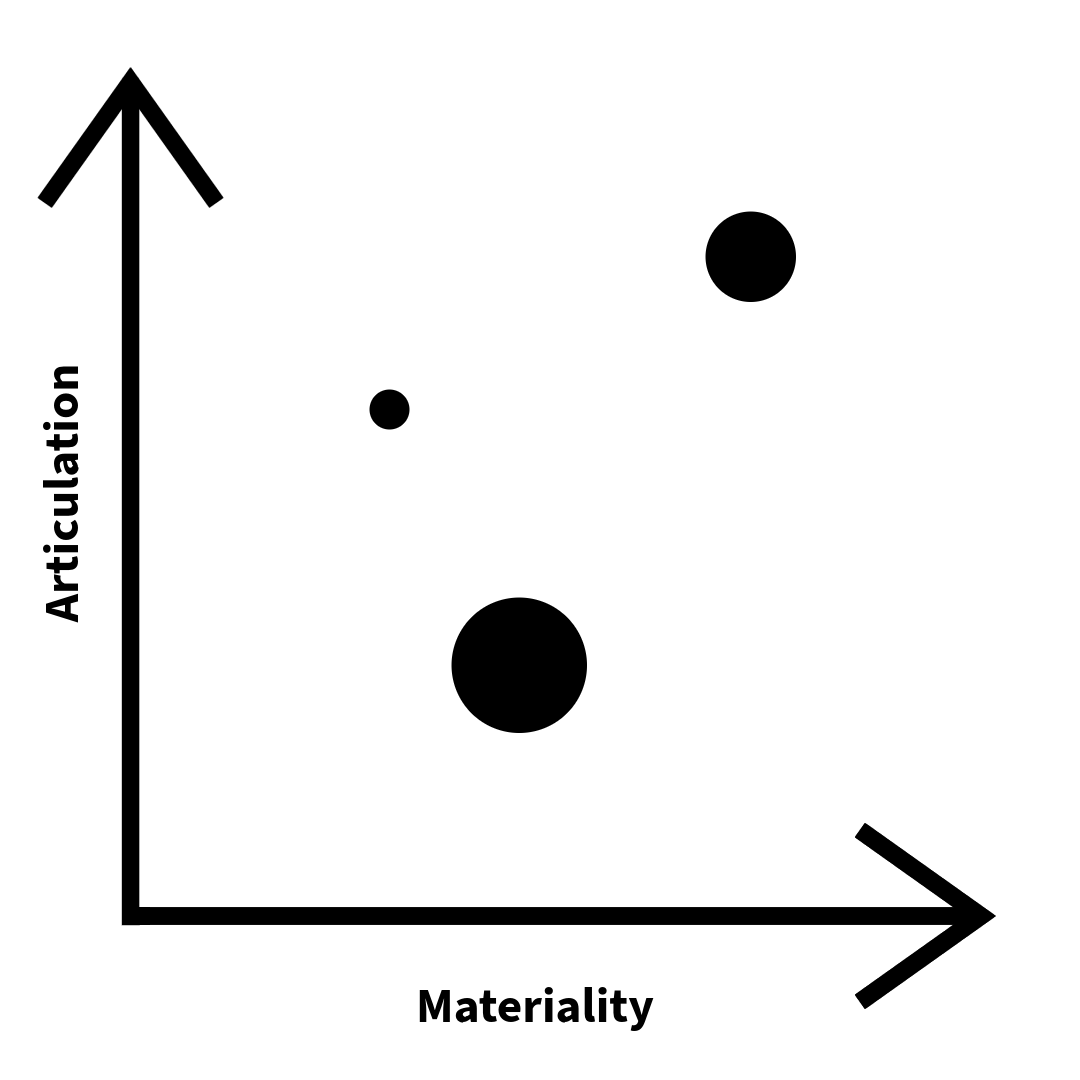
Articulation: The degree to which a sound is discrete or sharply defined. From diffuse or blurred textures to crisp, well-defined acoustic events. From dark to bright.
Materiality: The extent and manner in which material is physically activated by movement or contact, shaping the energy and character of its sound. How strongly and directly the fabric is being driven by motion, air, or surface contact. From smooth to rough.
Duration: The attack, decay, sustain, and release. From short-lived to prolonged sounds.
The bubble chart visualises sounds according to their perceived articulation and materiality using relative scales from 0 to 10. Rougher or crunchier textures appear further along the x-axis, while sharper, more distinct sounds appear higher on the y-axis. The size of each bubble represents the sound’s duration in seconds/miliseconds; larger bubbles are longer. Each individual bubble represents a single data record with the position determined by its values across all three variables allowing for effective comparison.
These sounds are also organised into six descriptive categories.
Categories
The categories account for a range of sounds, moving from softer to harder sound types, while also indicating the nature of the materiality. Categorisation is NOT according to cloth type (e.g. leather or silk), because the way the material sound is used is the most important factor in defining its narrative value. The focus, then, is on the function of the sound.
Rustle: Soft sounds, normally in quick succession, made by moving or rubbing cloth, a soft muffled crackling sound through contact with the body.
Frou-frou: A gentle rushing sound often made by the movement of long flowing garments in motion.
Floosh: A portmanteau of ‘flowing’ and ‘swooshing’. Moving continuously in a specified direction, often sharply, and usually featuring air resistance.
Scrumph: A mash up of ‘scrunching’ and ‘emphasis’ and/or something with ‘oomph’. A crunchier noise with notable concerted physical effort or energy, often in direct contact with a surface.
Rip: Tearing roughly or violently.
Zip: A sudden sharp hissing or sibilant sound usually made when closing or opening a zipper.
How were films chosen?
Sequences in this corpus were chosen where recognisable instances of exemplar sound qualities could be found, while also ensuring a historical spread and representation across different functional categories of sound use. Together, the selection spans a range of practices, from subtle and largely ‘unheard’ applications to more foregrounded or overt uses, reflecting both conventional and heightened approaches to film sound. While diverse in style, the films also reveal shared strategies and recurring functions within particular categories, helping to illuminate patterns of practice in an area that is often underappreciated and rarely made explicit.
How are the scale parameters determined?
The chart aims to triangulate the perceptual, computational, and conceptual, though an iterative process. Articulation and Materiality are plotted as relative scales (0–10) based on a series of perceptual and psychoacoustic measures, while Duration reflects the temporal attack, decay, sustain, and release parameters of each sound (time in seconds/milliseconds) and is represented by the relative bubble size.
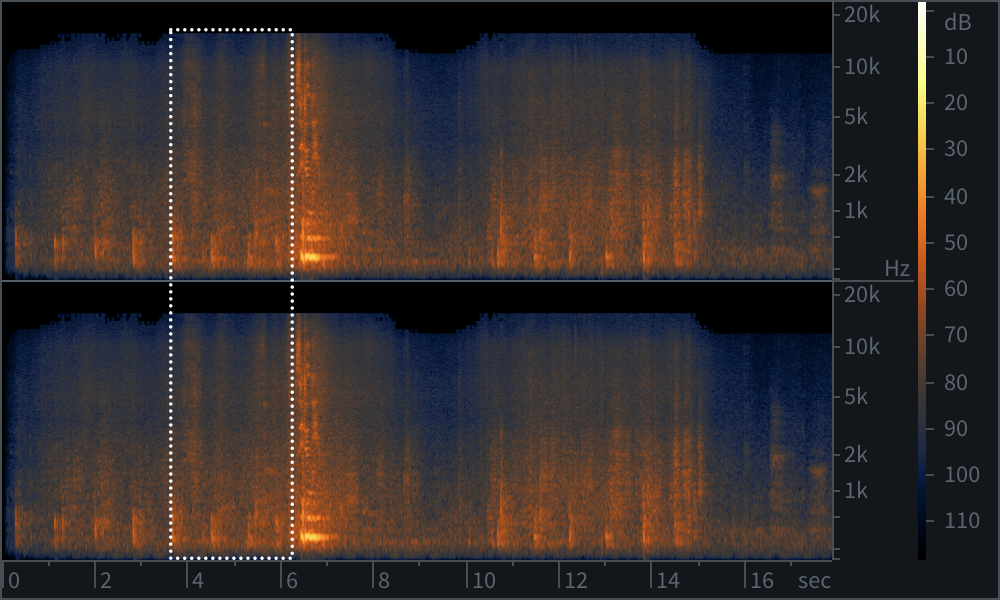
Time-frequency analysis processes are used to inform the scale parameters. Spectrograms and spectrum analyses help determine an initial ‘sonic fingerprint’ of the frequency intensity over time. Higher frequency presence generally indicates sharper or brighter sonic content. The distribution of energy and the presence of texture (e.g. granular, smooth, or harmonic) can be identified by the density and arrangement of spectral components over time. Computational analysis further refines this information with specific measures across a range of acoustic features (e.g. spectral flux, spectral sharpness, spectral flatness, RMS energy, etc) that quantify physical properties and correlate them with human auditory perception.
For example, the rustle in Call Me By Your Name and the frou-frou in Farewell, My Queen have similar basic sonic characteristics, but Call Me By Your Name is more foregrounded and has a more energetic texture with a distinctly sharper sound. These two sounds differ primarily in their energy distribution over time. Call Me by Your Name has higher average energy across the mid- and high-frequencies and a more consistent frequency presence. Farewell My Queen has greater high-frequency variance but is less stable losing its high‑frequency energy much faster.
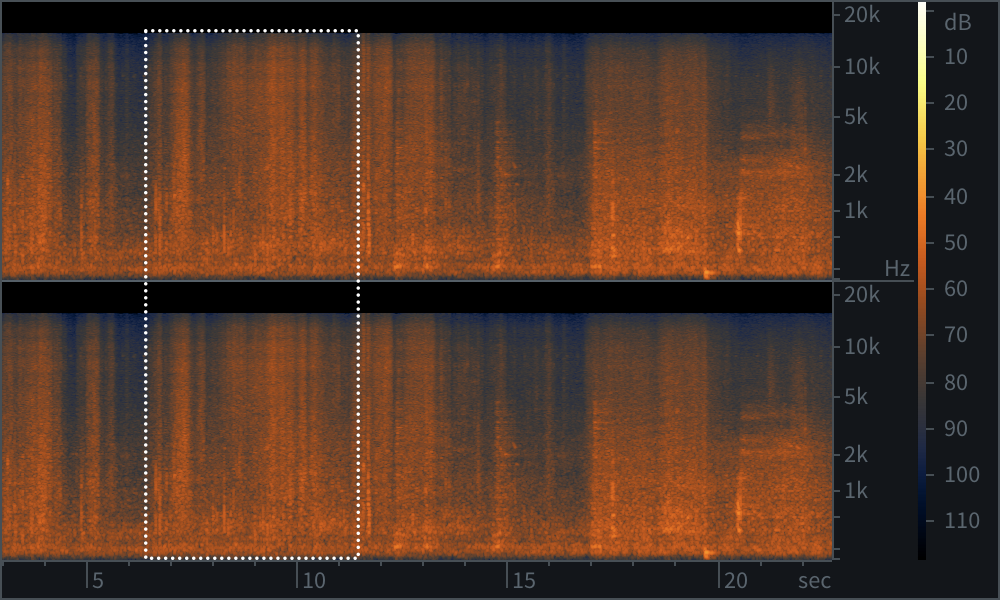
Call Me By Your Name - Rustle
Farewell My Queen - Frou-frou
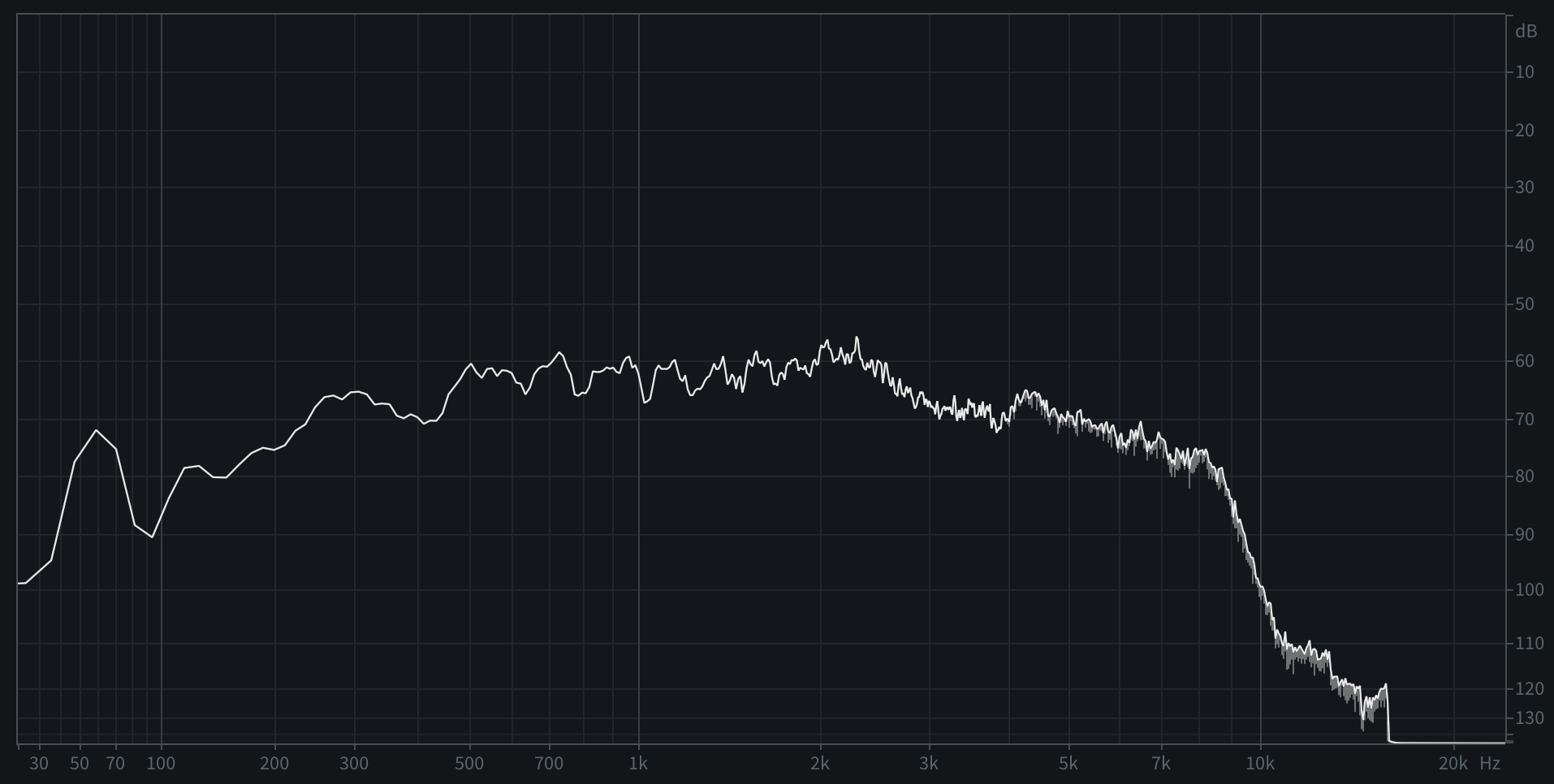
Rip and Zip sounds both tend to have very sharp and rich spectral content, but the content is distinct. The ‘rip’ in The Skin I Live In, for example, has a particular concentration in the hig-frequency range, giving it an especially ‘sharp’ character. Blazing Saddles is warmer, fuller and heavier with less sparkle and definition.
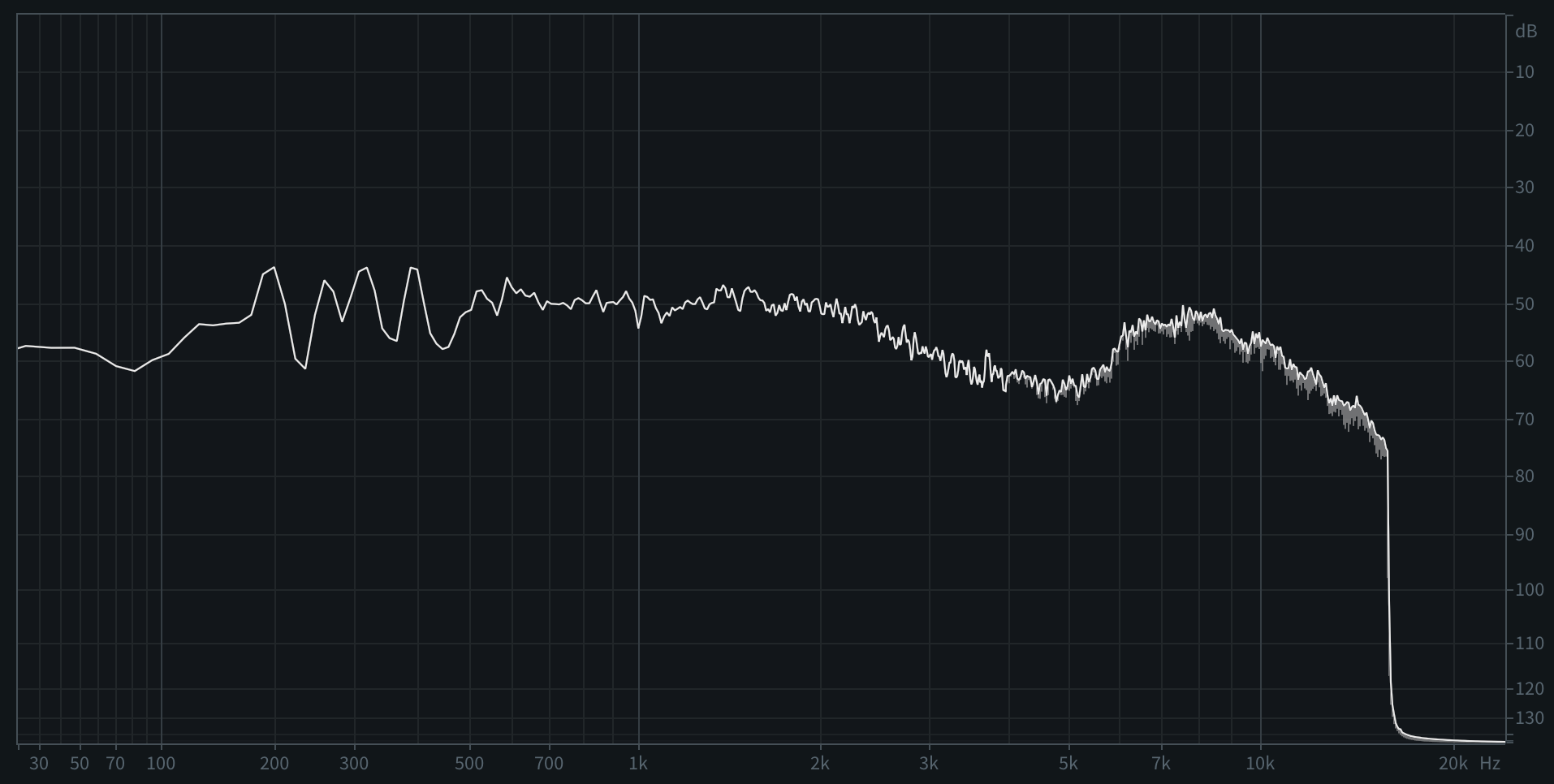
The Skin I live in - Rip
Blazing Saddles - Zip
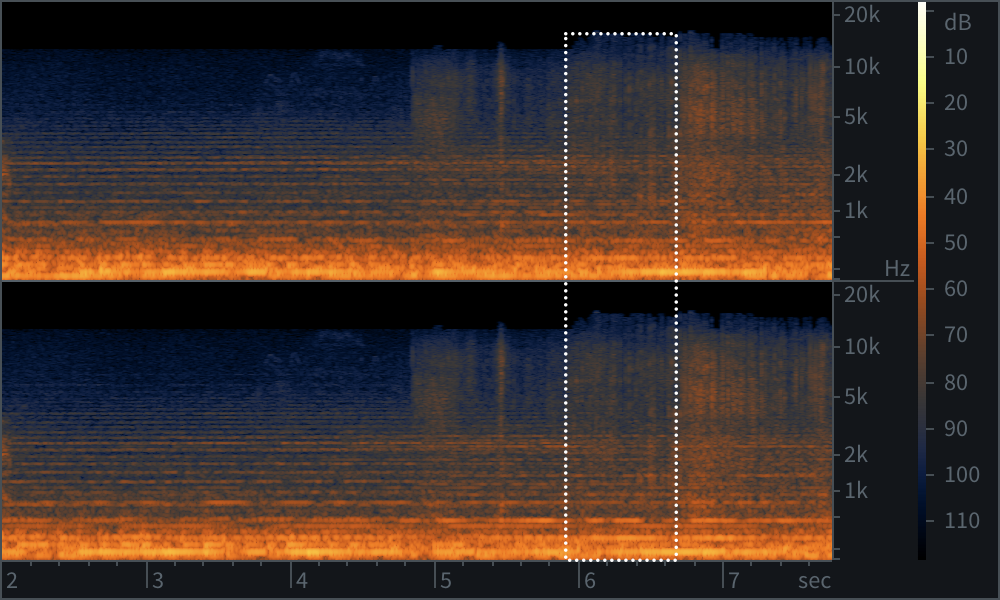
Drive - Scrumph
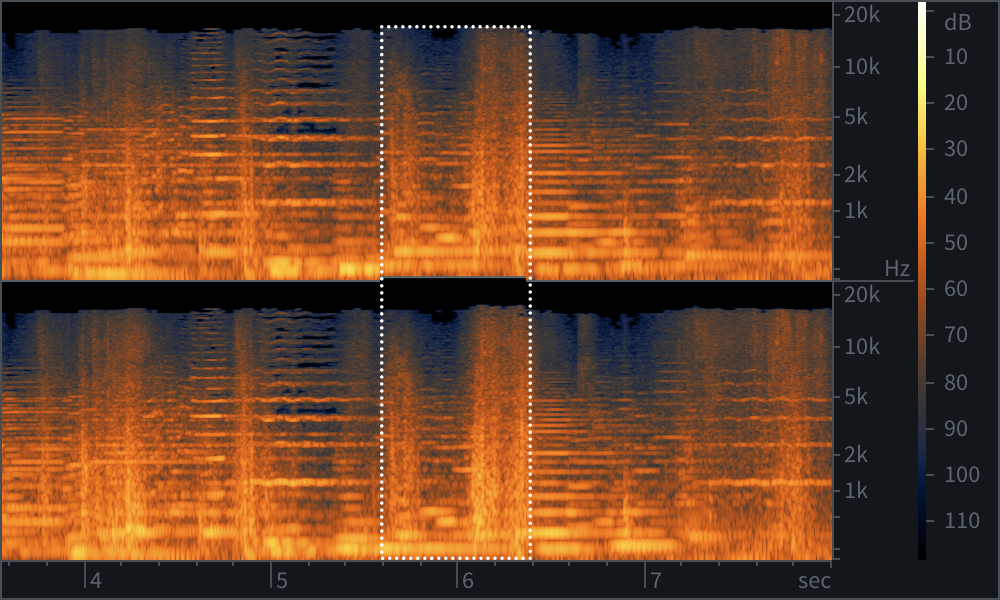
Anna Karenina - Floosh
We also have to note that simultaneous music or other sound is heard in parallel with the cloth sound in numerous examples, which distorts the measurement. The glove scrumph sound in Drive, for example, has pulsating music underneath it. The spectrogram shows a lot of low frequency information, which is not a feature of the cloth sound itself. Likewise, the floosh in Anna Karenina cannot be separated from the music, which is represented in the continuous horizontal lines in the spectrogram, showing the sustained pitched sounds at constant frequency, interspersed with the more extended broadband energy of the cloth sound. The challenge is that there are always a range of other sounds mixed into a sequence, so it is almost impossible to isolate the specific cloth sounds to analyse their specific characteristics.
Regardless of the tools we use to help us unpack the relative spectral qualities of these sounds, then, we ultimately still need to use our ears and judgment to interpret the relative sonic features. In this sense, the time-frequency analysis functions best as a guide rather than the ‘right answer’, supporting a listening practice that is attentive to balance and the subjective experience of sound in cinema.
-
Soft sounds, normally in quick succession, made by moving or rubbing cloth, a soft muffled crackling sound through contact with the body.
-
A gentle rushing sound often made by the movement of long flowing garments in motion.
-
A portmanteau of ‘flowing’ and ‘swooshing’. Moving continuously in a specified direction, often sharply, and usually featuring air resistance.
-
A mash up of ‘scrunching’ and ‘emphasis’ and/or something with ‘oomph’. A crunchier noise with notable concerted physical effort or energy, often in direct contact with a surface.
-
Tearing roughly or violently.
-
A sudden sharp hissing or sibilant sound usually made when closing or opening a zipper.